
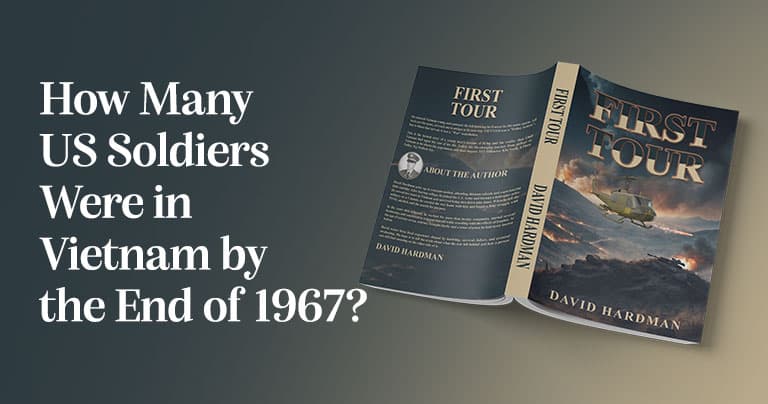
History often remembers wars through statistics, maps, and military campaigns. Numbers can tell us how many aircraft crossed the skies, how many battalions entered combat, or how many troops served overseas. Personal stories, however, reveal something far more meaningful. Every soldier carried dreams, fears, friendships, and moments that never appeared in official reports. First Tour: Echoes of the 1/9th Cavalry by David Hardman brings readers face to face with those hidden experiences, transforming familiar historical facts into an unforgettable human journey.
Many readers searching for information about the US troop buildup Vietnam timeline want more than military data. Curiosity often begins with troop movements and strategic decisions before shifting toward the people who actually lived through those events. David Hardman’s memoir answers that curiosity by placing readers inside the cockpit of a helicopter and inside the thoughts of a young pilot whose life changed forever.
America Entered a Different Kind of War
By the close of 1967, the United States had dramatically expanded its military commitment in Vietnam. Thousands of young men had crossed the Pacific, many believing they were serving a clear purpose. Commanders expected increasing military pressure to weaken North Vietnamese forces, although the battlefield rarely followed predictable plans.
Looking at the Vietnam War troop numbers by year helps explain why 1968 became such a defining period. Every increase in personnel represented another family saying goodbye, another college student changing direction, and another young officer preparing for circumstances no classroom could truly explain.
David Hardman stood among those soldiers.
Fresh from Army flight school, newly married, and filled with confidence, he boarded a flight toward Vietnam believing his training had prepared him for anything. Reality had very different plans.
Dreams Meet the Battlefield
Flying helicopters had fascinated Hardman since childhood. A simple helicopter ride at a county fair sparked a dream that guided nearly every major decision he made as a young man. Army aviation became the path toward achieving that ambition.
Arrival in Vietnam quickly erased any remaining illusions.
Original assignment orders changed almost immediately, placing him with B Troop, 1/9th Cavalry, 1st Cavalry Division, better known as the Headhunters. Veterans recognized the unit’s reputation instantly. New arrivals soon learned why.
Every assignment carried risk, although few matched the relentless pace awaiting helicopter crews operating near the Demilitarized Zone.
A Timeline Only Reveals Half the Story
Military historians frequently examine U.S. Army deployment Vietnam history through operational records, unit movements, and strategic objectives. Official documents explain where divisions moved and when campaigns began.
Hardman’s memoir explores everything those records leave behind.
Readers witness the uncertainty before each mission, the nervous jokes exchanged between pilots, the muddy tents that became temporary homes, and the quiet moments when fear settled in after another day’s flying had ended.
Combat exists throughout the narrative, although emotional survival becomes the greater challenge.
Becoming the “New Guy”
Military culture has always developed its own traditions.
Hardman arrived carrying fresh wings from flight school and confidence earned through demanding aviation training. None of that mattered once experienced pilots labeled him the “New Fucking Guy,” commonly shortened to NFG.
Life as an NFG included responsibilities nobody mentioned during recruitment.
Among them were:
- Filling endless sandbags to build helicopter revetments.
- Accepting practical jokes without complaint.
- Learning unwritten rules from seasoned crews.
- Proving reliability before earning genuine respect.
- Observing experienced Aircraft Commanders before touching the controls during dangerous missions.
Respect arrived slowly.
Every successful flight added another layer of trust between Hardman and the men responsible for bringing one another home.
More Than Numbers on a Chart
Searches for US troops in Vietnam 1965 vs 1967 often compare rapid military expansion across those years. Charts demonstrate how quickly American involvement accelerated.
Statistics alone never explain the emotional cost carried by individual soldiers.
Hardman remembers stepping off the aircraft into suffocating heat, unfamiliar smells, and a landscape unlike anything he had previously known. Television broadcasts had shown Vietnam from a comfortable distance.
Standing on Vietnamese soil changed everything.
Stories circulating among veteran pilots introduced him to the brutal realities of guerrilla warfare before he ever flew his first combat mission. Accounts of captured crews and unimaginable cruelty replaced every romantic idea he had once associated with military service.
Academic understanding disappeared.
Instinct took over.
Camp Evans Changes Everything
Camp Evans became far more than another military installation.
Every sunrise introduced another mission.
Every evening brought uncertainty about who might return.
Rocket attacks interrupted sleep without warning. Mortars reminded everyone that danger rarely announced itself politely. Helicopter engines provided reassurance because flying meant movement, purpose, and another opportunity to survive.
Hardman gradually discovered that fear never disappeared.
Experience simply taught soldiers how to function alongside it.
Flying Into History
Readers searching for how many troops were in Vietnam before Tet Offensive often discover enormous military preparations leading into January 1968. Few expected the conflict to explode with the intensity that soon followed.
Hardman happened to be there when history changed.
Early reconnaissance missions introduced him to search-and-destroy operations alongside scout helicopters flying dangerously low across jungles, rice paddies, and hidden enemy positions. Gunships remained close behind, prepared to answer enemy fire within seconds.
Every mission demanded absolute concentration.
One mistake could cost an entire crew.
Confidence Earned in the Air
Aircraft Commanders carried enormous responsibility.
Lives depended upon split-second judgment.
Hardman initially served as a co-pilot, absorbing lessons from experienced aviators who had already survived months of combat. Radio procedures, navigation, reconnaissance techniques, emergency reactions, and crew coordination gradually became second nature.
Praise remained rare.
Constructive criticism arrived frequently.
Small improvements eventually convinced senior officers that he deserved greater responsibility.
Promotion to Aircraft Commander marked an important milestone, although it also meant accepting responsibility for every decision made inside the cockpit.
Brotherhood Built Under Pressure
Friendships formed differently inside combat zones.
Shared hardship created bonds impossible to duplicate elsewhere.
Crew chiefs, door gunners, mechanics, and fellow pilots relied upon one another every single day. Conversations ranged from hometown memories to dark humor designed to keep anxiety manageable.
Simple routines became valuable.
Coffee before dawn.
Cards after missions.
Stories exchanged inside muddy tents.
Small victories mattered because tomorrow offered no guarantees.
The Tet Offensive Changed Everything
History books often describe the Tet Offensive through maps, casualty figures, and battlefield reports. Hardman presents something entirely different. Readers witness the confusion from inside Camp Evans as rockets tear through the darkness, sirens echo across the base, and soldiers scramble toward bunkers before they fully understand what is happening.
Looking back at the US troop buildup Vietnam timeline, it becomes clear why American commanders believed they had established a strong military presence before Tet. Confidence quickly gave way to uncertainty once coordinated attacks erupted across South Vietnam, proving the conflict had entered a far more dangerous stage.
Every page captures the tension of those moments without exaggeration. Fear arrives naturally because the author simply tells the truth.
A Helicopter Pilot’s Battlefield
Helicopters became the lifeline of modern warfare in Vietnam.
Hardman explains how reconnaissance teams searched dense jungle for hidden bunkers, enemy trails, and movement invisible to infantry units. Scout helicopters flew dangerously low, exposing themselves to hostile fire while gunships circled above, ready to strike within seconds.
Each mission demanded complete trust between every member of the crew.
Responsibilities included:
- Protecting vulnerable scout aircraft.
- Responding instantly to enemy fire.
- Supporting infantry operations.
- Evacuating wounded personnel.
- Returning safely despite overwhelming odds.
Military aviation enthusiasts will appreciate the technical realism, while general readers remain invested because every mission revolves around human decisions instead of equipment alone.
Operation Pegasus Through One Pilot’s Eyes
Relieving the Marines trapped at Khe Sanh became one of the defining operations of the Vietnam War.
Hardman participated in Operation Pegasus, flying dangerous reconnaissance missions through contested territory where enemy resistance could emerge without warning. His descriptions reveal the exhausting rhythm of combat aviation, where adrenaline and discipline existed side by side.
Anyone studying the Vietnam War troop numbers by year can appreciate why operations like Pegasus carried enormous strategic importance. Large troop commitments meant little unless helicopters could move supplies, provide reconnaissance, and support soldiers operating in remote regions.
Hardman’s perspective transforms military history into a gripping personal experience.
Survival Comes at a Cost
Danger eventually became routine.
Hardman accepted promotions, earned greater responsibility, and gained the confidence of fellow pilots. Experience improved his judgment, although it never guaranteed safety.
Operation Delaware delivered one of the memoir’s most astonishing chapters.
During intense fighting in the A Shau Valley, Hardman survived two helicopter shoot-downs in a single day. One crash occurred along a ridgeline. Another ended inside a rice paddy where fire threatened both aircraft and crew.
Moments like these separate First Tour from ordinary military memoirs.
Readers never feel as though they are observing events from a comfortable distance. Every landing, radio transmission, and split-second decision unfolds with remarkable immediacy.
The Palace Built Inside a War Zone
Life during combat required more than courage.
Soldiers also needed moments of normality.
Hardman and fellow pilot Mike Atkins responded creatively by constructing an underground bunker they jokingly called “The Taj Mahole.”
Built through determination, resourcefulness, and plenty of unofficial bartering, their private retreat eventually included surprising comforts.
Inside the bunker they created:
- A poker table for long evenings.
- Cold drinks stored inside a refrigerator.
- Comfortable seating.
- Protection from nightly rocket attacks.
- A gathering place where pilots could briefly forget the war waiting outside.
Stories like this reveal another side of military life rarely discussed in traditional histories. Humor, ingenuity, and friendship became essential survival tools.
Flying the New Cobra
Technology continued evolving during the conflict.
Hardman became one of the earliest pilots in his division selected to retrieve and operate the formidable AH-1G Cobra gunship, an aircraft designed specifically for attack missions.
Readers interested in US soldiers in Vietnam peak numbers often focus on expanding troop strength, although aviation technology also transformed battlefield tactics during the same period. Hardman’s firsthand experience introduces readers to this transition through the eyes of someone trusted to fly one of the Army’s newest combat helicopters.
His enthusiasm for aviation never disappears, even during the war’s darkest moments.
A Battle Few Soldiers Could Escape
Physical survival represented only part of the challenge.
Emotional endurance proved equally demanding.
Hardman gradually recognized that thinking about home became dangerous in its own way. Memories of his wife, parents, and ordinary life threatened the emotional distance he believed necessary for staying alive.
Silence replaced letters.
Weeks became months.
Eventually, military officials summoned him after his family contacted the Red Cross fearing he had been killed.
His explanation remains one of the memoir’s most powerful moments.
Thinking too deeply about home, he believed, could weaken the mental focus required for combat.
Readers examining US army deployment Vietnam history rarely encounter such intimate reflections in official records. Hardman’s honesty gives extraordinary depth to experiences many veterans struggled to express.
More Than a Vietnam Memoir
Far fewer examine how conflict quietly reshapes identity.
Many books describe military campaigns.
David Hardman avoids political arguments and dramatic speeches. Honest observations carry the narrative from beginning to end, allowing readers to draw their own conclusions about courage, sacrifice, fear, and resilience.
Several qualities make this memoir especially compelling:
- Authentic firsthand storytelling.
- Rich historical context.
- Vivid helicopter combat sequences.
- Strong friendships among soldiers.
- Honest exploration of trauma and recovery.
- Powerful emotional reflection without sentimentality.
Every chapter reminds readers that surviving war does not necessarily mean leaving it behind.
Why First Tour Belongs on Your Reading List
Searching US troops in Vietnam 1965 vs 1967 provides valuable historical context, but numbers alone never explain what individual soldiers experienced once they arrived overseas.
First Tour: Echoes of the 1/9th Cavalry fills that gap beautifully.
Hardman’s voice remains genuine from beginning to end. Successes feel earned. Losses carry emotional weight. Small moments inside tents, helicopters, and muddy bunkers become just as memorable as large military operations.
Military history enthusiasts, aviation fans, and readers who appreciate honest memoirs will all discover something meaningful inside these pages.
Long after the final chapter ends, one realization remains.
War changes landscapes.
It also changes every person who survives it.
David Hardman’s memoir preserves those changes with compassion, humility, and unwavering honesty, making First Tour: Echoes of the 1/9th Cavalry an absorbing account of one soldier’s remarkable journey through one of history’s most demanding conflicts.
Frequently Asked Questions
1. How many troops were in Vietnam before the Tet Offensive?
Before the Tet Offensive began in January 1968, the United States had deployed hundreds of thousands of service members to Vietnam. First Tour places readers inside that pivotal moment through David Hardman’s firsthand experiences as a helicopter pilot.
2. Is First Tour: Echoes of the 1/9th Cavalry based on real events?
Yes. The memoir is based on David Hardman’s personal experiences serving as an Army helicopter pilot during his first Vietnam tour in 1968.
3. Does the book focus only on combat missions?
No. Combat forms an important part of the narrative, although equal attention is given to friendship, military life, emotional survival, and the lasting effects of war.
4. Who would enjoy reading this memoir?
Military history readers, Vietnam War enthusiasts, aviation fans, veterans, and anyone interested in true stories of courage and personal transformation will appreciate this book.
5. Why is First Tour different from other Vietnam War memoirs?
Hardman combines authentic helicopter combat experiences with deeply personal reflection, offering readers an intimate look at how war shapes identity long after the battlefield has been left behind.